
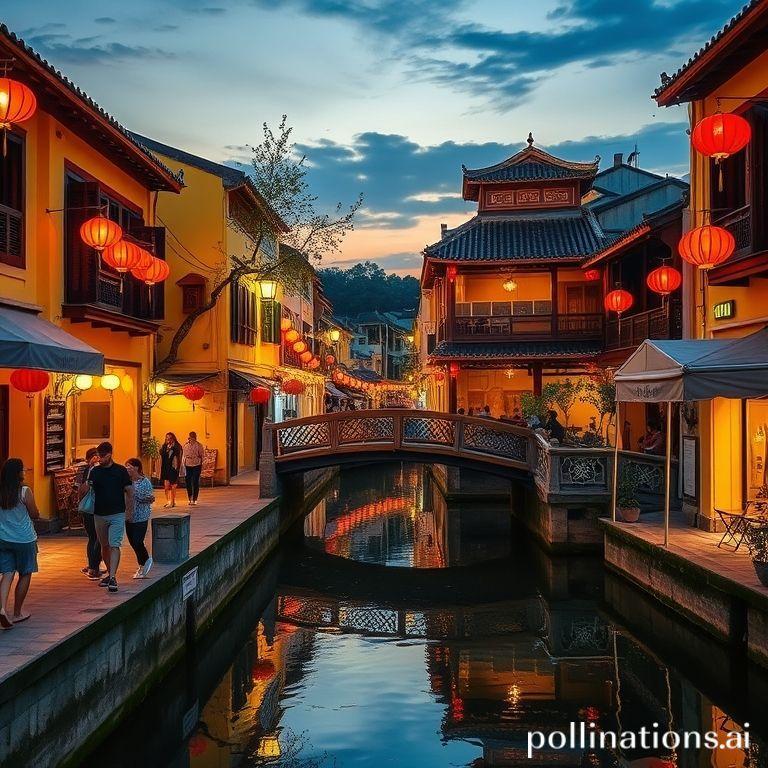
Imagine stepping into a place where time seems to freeze, like hitting pause on a movie. Golden lanterns light up old streets, and you can feel the heartbeat of Vietnam’s trading history. Hoi An Ancient Town, a special place recognized by UNESCO, is one of Southeast Asia’s most magical spots. This well-kept port town on Vietnam’s central coast is like a history book come to life. You can walk through streets that show a mix of cultures—from Chinese meeting halls to Japanese merchant homes—all while the calm Thu Bon River flows nearby.
In this guide, we’ll explore what makes Hoi An so unique. Think of the town as a living fairytale when lanterns glow at night, or a giant workshop where you can get custom-made clothes in just one day. We’ll look at the buildings that whisper stories of global trade, the food that makes Hoi An a paradise for eaters, and the traditions that keep this town feeling alive.
The Glowing Evenings of Hoi An
When the sun goes down in Hoi An, something amazing happens. The town turns from a pretty historic spot into a glowing wonderland, lit by thousands of colorful silk lanterns. This isn’t just for show—it’s a tradition that started centuries ago, when lanterns helped merchants and sailors find their way. Today, these evenings are like a real-life postcard and one of Vietnam’s most unforgettable sights.
Making lanterns in Hoi An is an art that’s been around for over 400 years. It’s like a family recipe, passed down from parents to children. These aren’t ordinary lanterns—each one is handmade using silk stretched over bamboo frames, with bright colors and patterns that show off Vietnam’s creativity. During full moon festivals, the town turns off electric lights, and the streets glow only with lanterns and candles floating on the river.
Walking through Hoi An when the lanterns are lit feels like stepping into a painting. The soft, colorful light dances on yellow walls, mirrors in the water, and creates a romantic mood. Families sit outside their shops, kids play in the gentle light, and the air smells of incense and street food. It’s an experience that touches all your senses and stays with you.
“When the lanterns light up Hoi An, the town doesn’t just become beautiful—it becomes alive with the spirits of centuries past. The light connects us to the merchants, sailors, and families who have called this place home.” – Local Hoi An historian
For the best lantern experience, try to visit during the monthly full moon festival. The town celebrates with traditional music, games, and floating lantern ceremonies. You can also join workshops to make your own lantern and learn this beautiful craft from local experts.
Tailor Shops: Clothing Made Just for You
Hoi An is famous as Vietnam’s capital for custom clothing. This tradition comes from its history as a trading port, where silk and fabrics were valuable goods. Today, more than 400 tailor shops line the streets, offering everything from business suits and fancy dresses to traditional Vietnamese áo dài.
Here’s how it works: First, you pick your fabric from thousands of choices—like soft Vietnamese silk or imported wool. Then, skilled tailors measure you carefully and talk about designs and styles. What makes Hoi An’s tailors special is their ability to copy any outfit from photos, with multiple fittings to make sure it fits perfectly.
Many of these shops are family businesses where skills have been handed down through generations. The quality and good prices have made Hoi An a go-to spot for fashion lovers worldwide. Besides clothes, you can also get custom shoes, leather goods, and accessories to match your new outfits.
Historic Buildings: A Mix of Cultures
Hoi An’s buildings tell the story of its multicultural past as a busy international port from the 1400s to 1800s. The town’s unique feel comes from the blend of Vietnamese, Chinese, Japanese, and European styles that have been kept in great condition. Walking here is like exploring a museum without walls, with over 800 historic buildings.
The Japanese Covered Bridge, built in the 1590s, is one of Hoi An’s most famous landmarks. This pretty wooden bridge has a pagoda roof and detailed carvings, linking the Japanese and Chinese neighborhoods. It has survived centuries of weather and conflict, acting as both a practical crossing and a symbol of cultural connection.
Chinese assembly halls are another highlight, built by merchant groups from different parts of China. The Fujian Assembly Hall is especially stunning, with its fancy gate, garden courtyard, and temple for the sea goddess Mazu. These halls were used as community centers, temples, and meeting spots, decorated with wood carvings, statues, and ceramic art.
Traditional Vietnamese tube houses show local smart design. These narrow, deep buildings often have shops in front and homes in back, with inner courtyards for light and air. Many have been owned by the same families for generations, keeping both the buildings and their traditions alive.
Food Heaven: A Taste of Hoi An
Hoi An’s food scene is a delicious mix of cultures, creating dishes you won’t find anywhere else in Vietnam. The town’s food reputation has grown so much that many visitors come just for food tours and cooking classes. From street stalls to riverside restaurants, every meal here feels like a flavor party.
Cao lầu is Hoi An’s signature dish—a noodle bowl with thick, chewy noodles that can only be made with local well water. Topped with barbecue pork, fresh herbs, and crispy rice crackers, this dish is a perfect example of cultural mixing. Locals say the noodles were inspired by Japanese soba and Chinese wheat noodles, adapted over time to become something unique to Hoi An.
White rose dumplings (bánh bao vac) are another Hoi An specialty. These delicate dumplings look like rose petals, filled with spiced shrimp or pork, and steamed perfectly. One family has been making them for generations, keeping the recipe secret and supplying restaurants all over town.
The central market is a food adventure where you can try fresh spring rolls, grilled seafood, exotic fruits, and local sweets. Cooking classes are popular too, letting visitors learn traditional methods from local chefs and bring Hoi An flavors back home.
River Life: The Heart of Hoi An
The Thu Bon River has been Hoi An’s lifeline for centuries, serving as the main transport route that made the town a successful trading port. Today, the river still shapes daily life and offers fun activities for visitors. The riverside walkway buzzes in the evenings with restaurants, cafes, and street performers, making it a social hotspot.
Traditional basket boat rides let you experience the river in a unique way. These round boats, originally used by fishermen, are now steered by locals who can spin them like tops and navigate narrow mangrove paths. For a more relaxed time, sunset cruises on bigger boats offer gorgeous views of the Ancient Town as lanterns start to glow.
Fishing with local families is a popular cultural activity. Visitors can learn traditional methods using nets and bamboo traps, often including trips to water coconut forests and lessons about how river life has shaped Hoi An’s culture and economy.
Monthly boat festivals and river ceremonies keep ancient traditions alive, with decorated boats, floating lanterns, and offerings to river spirits. These events show the deep connection between Hoi An’s people and the water that has supported them for generations.
Living Traditions: Culture in Action
Beyond its pretty buildings and landscapes, Hoi An is a living cultural center where traditions stay strong and meaningful. Being a UNESCO World Heritage site has helped protect not just structures but also intangible culture—like folk music, traditional crafts, festivals, and religious practices.
Traditional music performances happen often in the Ancient Town, featuring instruments like the đàn bầu (monochord) and đàn tranh (zither) that create hauntingly beautiful Vietnamese folk sounds. These shows usually take place in historic houses or assembly halls, making you feel like you’ve traveled back in time.
Handicraft villages near Hoi An continue centuries-old traditions in pottery, mat weaving, and woodworking. The Thanh Ha pottery village, just across the river, has been making special terracotta products for over 500 years. Visitors can watch artisans work and even try making pottery themselves using old techniques.
Festivals throughout the year celebrate fishing, farming cycles, ancestor worship, and cultural heroes. These events involve the whole community and give visitors a rare look into Hoi An’s spiritual and social life. The biggest is the Mid-Autumn Festival, when the town becomes extra magical with lion dances, children’s lantern parades, and special mooncakes.
Protecting Hoi An for the Future
Hoi An faces the challenge of balancing tourism with heritage protection, and the community has started many sustainable practices to keep its unique character. The town is a model for cultural tourism in Vietnam, showing how history preservation and economic growth can work together.
The Hoi An Heritage Foundation helps with restoration projects, documenting cultural traditions, and educational programs for both residents and visitors. Strict rules control building maintenance and new construction in the Ancient Town, making sure any changes respect the historical style.
Community-based tourism lets visitors experience real local life while supporting residents directly. This includes staying in traditional homes, farming in the countryside, and workshops with master artisans. By joining these responsible activities, visitors help preserve Hoi An’s living culture.
Environmental care has also become important, with efforts to reduce plastic waste, protect the river ecosystem, and promote eco-friendly transport. The car-free rule in the Ancient Town during evenings makes visits better while cutting pollution and saving historic structures.
Hoi An’s journey through more than 400 years has created a place like no other—where history feels real, beauty waits around every corner, and cultural traditions flourish today. From magical lantern evenings to world-class tailoring, from unique foods to preserved buildings, every part of Hoi An shares a story of cultural exchange and adaptation.
This ancient port town shows us that some places can honor their past while living in the present, creating an experience that touches visitors from around the world. The warmth of its people, the richness of its traditions, and the sheer beauty of its streets and waterways make Hoi An not just a place to visit, but a memory to cherish forever.
As you plan your trip to Vietnam, remember that Journey Vietnam offers detailed guides and visual tours of places like Hoi An. Visit our website at https://journeyvietnam.top for travel info and subscribe to our YouTube channel at https://www.youtube.com/@JourneyVietnam to see Hoi An’s lantern magic in our videos. Let us help you discover Vietnam’s soul, one ancient street at a time.