
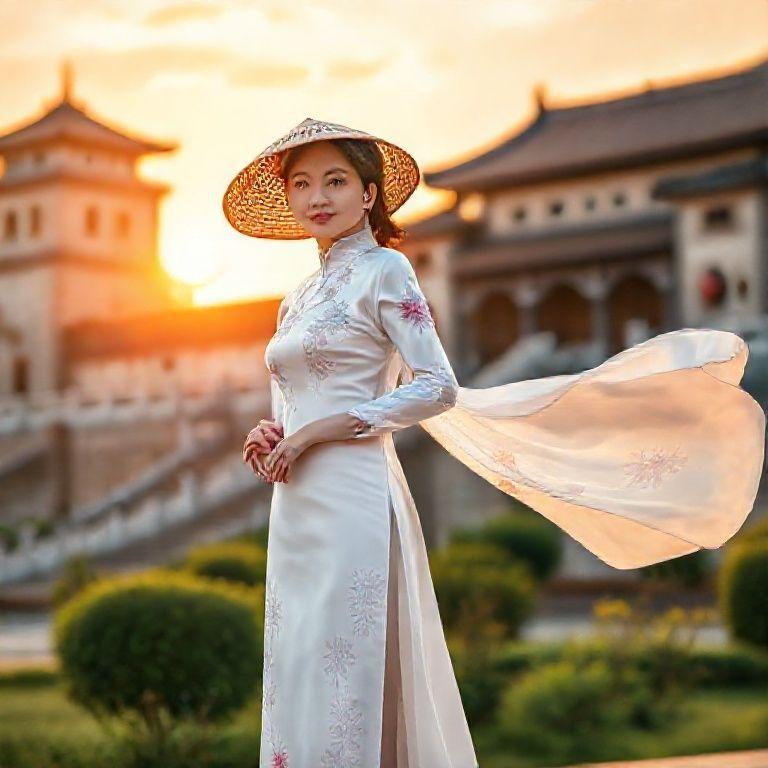
Think of the Ao Dai as Vietnam’s cultural signature—like a country’s flag made into clothing. This special dress shows both old traditions and new ideas in its beautiful shape. It’s not just something to wear; it’s a story about what it means to be Vietnamese. The Ao Dai has changed over hundreds of years but still keeps its unique look that everyone recognizes.
At Journey Vietnam, we think knowing about the Ao Dai helps you understand Vietnamese culture better. This elegant dress mixes beauty with purpose, shyness with confidence, and old ways with new ideas. From ancient palaces to modern fashion shows, the Ao Dai stays important while changing with the times. It’s like a living history book of Vietnam’s culture.
In this guide, we’ll explore the Ao Dai’s long history, see how it changed through different time periods, and give helpful tips if you want to get your own custom-made Ao Dai. Whether you love culture, fashion, or just want to learn about Vietnamese traditions, this journey will help you appreciate one of the world’s most beautiful national dresses.
The Early Beginnings of Vietnamese Clothing
The Ao Dai’s story starts long before it looked like it does today. Ancient Vietnamese clothing began over two thousand years ago. Early clothes were practical for the hot weather but also showed a person’s place in society. The first versions had separate pieces—a long shirt and pants—that would later become the connected design we know now.
During the Nguyen Dynasty in the 1700s, the early Ao Dai started to form. Lord Nguyen Phuc Khoat, who ruled in Hue, created a dress code that mixed Vietnamese and Chinese clothing styles. This early design had a four-part gown worn over pants, creating the basic shape that would define the Ao Dai for centuries. The design worked well for Vietnam’s climate and created a special look that was all their own.
As historian Nguyen Van Huy explains in his studies:
“The Ao Dai is like a perfect recipe—it mixes Vietnamese style with ideas from nearby cultures, all balanced through the Vietnamese love for harmony.”
This mixing of influences created clothing that was uniquely Vietnamese while recognizing their place in the larger Asian world.
Foreign Influences and Modern Changes
When the French came to Vietnam (1887-1954), many things changed, including fashion. Western sewing methods and style ideas began to influence traditional dress, creating what many call the first modern Ao Dai. Vietnamese designers added darts and seams that made the dress fit closer to the body, showing natural curves while keeping the dress modest.
This time brought the “Le Mur” Ao Dai, designed by artist Nguyen Cat Tuong in the 1930s. It introduced new sleeve styles and a tighter fit that really changed how the dress looked. While some people didn’t like this break from tradition at first, this new design created the foundation for today’s Ao Dai. The updated dress allowed easier movement while keeping the elegant, flowing lines that became the Ao Dai’s trademark.
Fashion expert Tran Thi Ngo says:
“The colonial period was like a creative tug-of-war for Vietnamese clothing. Designers were balancing tradition and new ideas, making dresses that respected the past while trying new things. The result was clothing that could show both cultural pride and personal style.”
This balancing act between keeping old ways and trying new ones still defines how the Ao Dai changes today.
The Ao Dai in Today’s Vietnam
In modern Vietnam, the Ao Dai remains the national dress while fitting into contemporary life. It’s still the uniform for many high school students and teachers, creating beautiful rivers of white Ao Dai on streets near schools every morning. People also wear it for important events—weddings, New Year celebrations, graduations, and formal parties where cultural pride is center stage.
Today’s Ao Dai world is wonderfully varied, from traditional silk designs to creative versions using modern fabrics, patterns, and cuts. Designers like Si Hoang and Minh Hanh have become famous worldwide for their Ao Dai collections that mix traditional skills with current fashion ideas. Their work shows how this centuries-old dress continues to inspire new designers and wearers.
According to a 2022 study by the Vietnam National Institute of Culture and Arts Studies, 87% of Vietnamese women own at least one Ao Dai, and 76% wear it at least once a month for special events. These numbers show how the dress stays relevant in Vietnamese daily life and works as a living cultural tradition rather than something you only see in museums.
Regional Differences and Cultural Meaning
While the basic shape stays the same across Vietnam, regional variations show local weather, traditions, and style preferences. The Hue Ao Dai, for example, usually has more conservative colors and patterns, reflecting the city’s history as the royal capital. Southern Ao Dai often have brighter colors and more adventurous designs, while northern styles might include influences from ethnic minority groups.
These regional differences go beyond just looks to include cultural meanings and social uses. In some communities, specific colors or patterns have special meanings—red for luck and happiness, yellow for royalty and success, white for purity and youth. Understanding these details helps you see the Ao Dai as more than just clothing—it’s a complex way of communicating culture.
As cultural expert Dr. Le Hong Ly notes:
“The Ao Dai works like a canvas where Vietnamese women paint their identities—where they’re from, their place in society, their personal taste, and even their political views. Reading an Ao Dai is like reading a story about the woman wearing it and the culture that created her.”
This many-layered meaning makes the Ao Dai a rich subject for cultural discovery.
The Skill of Ao Dai Making
Making a custom Ao Dai is a careful process that mixes exact measuring with artistic vision. A well-made Ao Dai needs between 10-15 precise measurements, with special attention to shoulder slope, chest, waist, and hip measurements to make sure the dress flows beautifully over the body. The making process usually takes 3-7 days, depending on how complex the design is and the tailor’s schedule.
Traditional Ao Dai tailors follow time-tested methods passed down through generations. The process includes:
- Choosing fabric: Picking materials like silk, brocade, or linen based on the event and season
- Creating patterns: Making the special five-part construction that allows the dress’s elegant flow
- Fitting sessions: Usually 2-3 meetings to ensure perfect fit and comfort
- Hand-finishing: Details like hand-sewn buttons and delicate embroidery that make the garment special
Master tailor Nguyen Thi Lan from Hanoi’s Old Quarter explains:
“Making an Ao Dai is like writing music—every part must work with every other part. The fabric, the cut, the color, the embroidery—they all combine to create something greater than the pieces alone. When a woman puts on a perfectly fitted Ao Dai, she doesn’t just look beautiful—she feels changed.”
This transforming quality is what makes the custom Ao Dai experience so memorable.
Where to Order Your Custom Ao Dai
For visitors to Vietnam wanting an authentic Ao Dai experience, several places stand out for their quality work and cultural truth. In Hanoi, Ao Dai 74 on Hang Trong Street has been creating beautiful custom Ao Dai for over forty years, with tailors who understand both traditional and modern styles. Their attention to detail and fabric knowledge makes them popular with careful customers.
Ho Chi Minh City offers many good choices, with Lý Club in District 1 being especially famous for their creative designs that stretch traditional Ao Dai boundaries while respecting its heart. Their use of unusual materials and patterns has earned them loyal customers among fashion-conscious Vietnamese women and international visitors.
For those interested in the Ao Dai’s historical home, Hue provides special chances to order dresses that reflect the city’s royal past. Ao Dai Xua focuses on recreating historical styles while adding modern comfort features, offering a real connection to Vietnam’s royal history.
When choosing a tailor, it’s important to:
- Look at examples of their previous work
- Talk clearly about your preferences, including the event, comfort needs, and style
- Allow enough time for multiple fittings
- Understand how to care for your chosen fabric
Taking Care of Your Ao Dai
Proper care is essential to keeping your Ao Dai beautiful and long-lasting. Silk Ao Dai should be hand-washed in cool water with gentle soap and hung to dry away from direct sunlight. Never twist silk fabric, as this can harm the fibers and affect how the dress hangs. For storage, use padded hangers to keep the shoulder shape and cover with breathable fabric to protect from dust while letting air move through.
Modern synthetic mixes are easier to care for but might not feel as luxurious as natural silk. No matter what fabric type, professional cleaning is recommended for heavily embroidered or beaded Ao Dai, since home cleaning can damage delicate decorations. With proper care, a high-quality Ao Dai can last for decades, becoming a treasured family piece that tells stories across generations.
As the Journey Vietnam team has learned through our cultural explorations, the relationship between a woman and her Ao Dai often grows stronger over time. Many Vietnamese women talk about their Ao Dai like old friends—clothes that have seen important life moments and hold memories in their threads. This emotional connection turns the Ao Dai from simple clothing into a keeper of personal and cultural history.
The Ao Dai stands as one of Vietnam’s greatest gifts to the world—clothing that contains beauty, tradition, and identity in every stitch. From its ancient beginnings to its modern versions, the Ao Dai continues to change while staying fundamentally Vietnamese. Ordering and wearing a custom Ao Dai gives you not just beautiful clothing but a deep cultural experience that connects you to Vietnam’s heart.
At Journey Vietnam, we love sharing these rich cultural experiences with our audience. Our YouTube channel shows detailed explorations of Vietnamese traditions, including behind-the-scenes looks at Ao Dai making and the stories of the artists who keep this tradition alive. We invite you to visit Journey Vietnam and subscribe to our YouTube channel to learn more about Vietnam’s rich cultural heritage.
Whether you plan to order your own Ao Dai or simply want to appreciate this beautiful tradition from far away, understanding the history, meaning, and skill behind Vietnam’s national dress will deepen your connection to this amazing country. The Ao Dai is more than fashion—it’s like wearing poetry, cultural memory, and national pride all woven together in flowing silk.