Vietnam’s festivals are like colorful threads woven through the fabric of daily life—they are living, breathing expressions of a culture that has grown strong for thousands of years. From nationwide celebrations of Tet to local events that highlight regional traditions, these festivals give travelers a special chance to see Vietnam’s heart and soul. Each celebration tells a story, whether it’s about family coming together, farming cycles, historical moments, or spiritual beliefs. If you want to experience real culture, planning your visit around these festivals can turn an ordinary trip into an unforgettable journey into Vietnam’s spirit and past.
At Journey Vietnam, we have spent years recording these amazing events, capturing the bright colors, deep emotions, and rich traditions that make each festival unique. Our YouTube channel gives you a front-row seat to celebrations across the country, from the busy streets of Hanoi during Tet to the lantern-filled nights of Hoi An during the Mid-Autumn Festival. These aren’t just events to watch—they’re experiences to dive into, opportunities to connect with local people and understand what makes Vietnam truly special.
In this detailed guide, we’ll explore Vietnam’s most fascinating festivals, giving you important information about dates, locations, and what makes each celebration stand out. Whether you’re planning your first trip to Vietnam or you’re an experienced traveler wanting to learn more about Vietnamese culture, this guide will help you find the festivals that match your interests and travel style.
Tet Nguyen Dan: Vietnam’s Lunar New Year
Tet Nguyen Dan, usually called Tet, is Vietnam’s most important and widely celebrated festival. Happening in late January or early February based on the moon calendar, Tet marks the start of spring and the new year. This is a time when families reunite, homes get a deep cleaning and decoration, and everyone prepares for a fresh beginning. The feeling across Vietnam during Tet is electric—streets explode with peach blossoms in the north and yellow apricot flowers in the south, markets overflow with traditional foods, and there’s a clear sense of excitement and renewal everywhere.
Getting ready for Tet starts weeks ahead, with families shopping for new clothes, preparing special foods like banh chung (square sticky rice cakes), and cleaning their homes to sweep away any bad luck from the old year. On New Year’s Eve, families gather for a reunion dinner with elaborate feasts. The first day of Tet is for immediate family, the second for friends, and the third for teachers and mentors—a tradition that shows how important relationships are in Vietnamese culture.
One of the most beautiful parts of Tet is the idea of “xong dat”—the first visitor to a home in the new year. Families often invite someone they believe will bring good luck to be their first guest. During our filming for Journey Vietnam, we’ve been lucky to see these close family moments and capture the happiness of children receiving lucky money in red envelopes from older relatives. The festival usually lasts three to seven days, with the most exciting celebrations happening in major cities like Hanoi, Ho Chi Minh City, and Hue.
“Tet is not just a holiday; it’s the soul of Vietnam. It’s when we remember our roots, honor our ancestors, and dream of prosperity for the coming year.” – Nguyen Thi Lan, Hanoi resident
For travelers, Tet offers a unique chance to experience Vietnamese culture at its most real. However, it’s important to plan carefully because transportation can be difficult and many businesses close during this time. The best approach is to either join a local family’s celebration (many homestays offer this experience) or focus on public celebrations like flower markets, temple visits, and firework displays.
Mid-Autumn Festival: A Magical Night of Lanterns
The Mid-Autumn Festival, known as Tet Trung Thu in Vietnamese, turns Vietnam into a fairy tale landscape every August or September (the 15th day of the 8th moon month). Originally a harvest festival, it has become mainly a children’s celebration, though people of all ages join in happily. The festival celebrates the moon at its brightest and roundest, representing completeness and family togetherness.
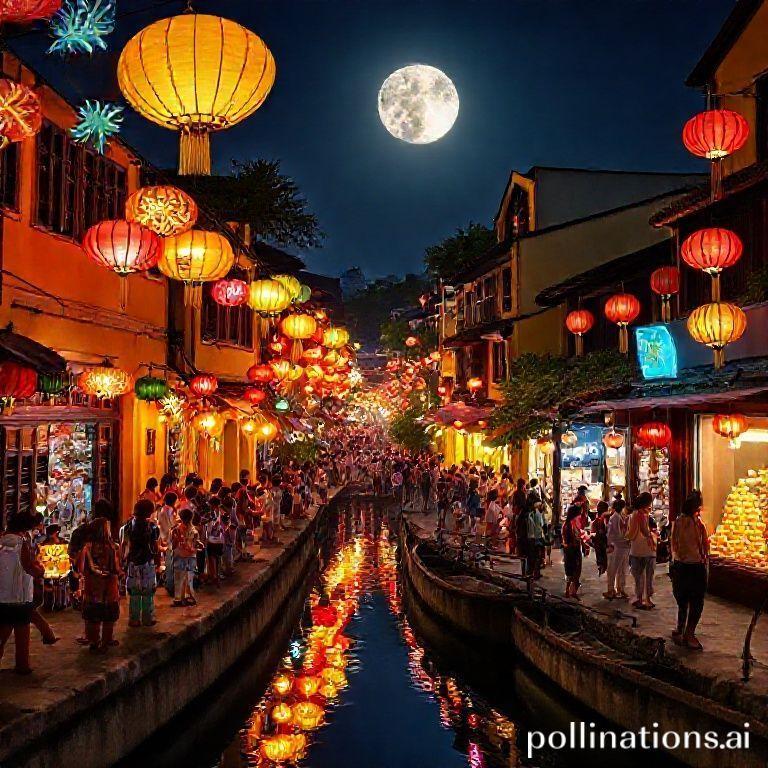
What makes the Mid-Autumn Festival especially magical is the ocean of colorful lanterns that lights up streets, parks, and homes across the country. Children carry lanterns of all shapes and sizes—stars, fish, butterflies, and traditional round lanterns—while marching in processions and joining lion dances. The lanterns represent brightness and hope, showing the way to a successful future.
No Mid-Autumn Festival would be complete without mooncakes, the famous pastry that comes in two main types: baked with a golden brown crust or snowy white with a soft, chewy texture. These detailed pastries usually contain sweet fillings like lotus seed paste, red bean paste, or mixed nuts, and sometimes include salted egg yolks to represent the full moon. During our food explorations for Journey Vietnam, we’ve recorded traditional mooncake making in Hanoi’s Old Quarter, where families have kept recipes for generations.
The best places to experience the Mid-Autumn Festival include Hoi An, where the ancient town becomes an amazing display of silk lanterns; Hanoi’s Old Quarter, with its lively street celebrations; and Ho Chi Minh City, where areas like Chinatown (Cho Lon) host elaborate lion dances and cultural performances. Many families set up altars in their homes or yards displaying mooncakes, fruits, and other offerings to show thanks for the harvest and pray for good fortune.
Hung Kings Temple Festival: Honoring National Ancestors
The Hung Kings Temple Festival happens every year from the 8th to the 11th day of the third moon month (usually March or April) at the Hung Temple in Phu Tho Province, about 85 kilometers northwest of Hanoi. This important national festival honors the Hung Kings, who are considered the founders of the first Vietnamese state—Van Lang—and the ancestors of the Vietnamese people.
The festival represents one of Vietnam’s most important cultural and historical events, drawing millions of pilgrims each year. The main ceremony happens on the 10th day, featuring detailed rituals including incense offerings, traditional music performances, and a procession from the bottom of Nghia Linh Mountain to the Upper Temple. Participants wear traditional costumes, carrying flags, flowers, and ceremonial objects while following ancient rules that have been preserved for generations.
What makes this festival especially interesting is how it mixes legend with history. According to tradition, the Hung Kings ruled Vietnam for 18 generations before the start of the Hong Bang Dynasty. The festival celebrates not only these legendary figures but also the idea of national origin and unity. As we’ve shown in our Journey Vietnam episodes, the atmosphere is both serious and celebratory, with a deep sense of national pride clear among attendees.
Beyond the formal ceremonies, the festival includes various cultural activities such as folk games, traditional singing (hat xoan), and food events featuring local specialties. For travelers interested in understanding Vietnam’s origins and national identity, this festival offers unmatched insights. The nearby city of Viet Tri serves as a good base for visiting the temple complex, and local guides can provide context about the historical and cultural meaning of the rituals.
Hue Festival: A Biennial Cultural Extravaganza
The Hue Festival is a major international event held every two years (usually in April, May, or June) in the former imperial capital of Hue. This amazing celebration shows both Vietnamese and international cultural heritage through a diverse program of arts, music, dance, and historical reenactments. Lasting about a week, the festival turns the entire city into a living museum and performance space.
At the center of the Hue Festival are the imperial traditions of the Nguyen Dynasty, Vietnam’s last royal family. Detailed ceremonies are recreated within the Imperial City, including the Nam Giao Offering Ritual, which was historically performed by emperors to pray for national peace and prosperity. These carefully researched reenactments feature hundreds of participants in authentic costumes, giving visitors a peek into Vietnam’s royal past.
The festival’s program is incredibly varied, featuring everything from traditional Vietnamese court music (nha nhac) to modern art displays, from water puppet performances to international folk dance groups. The Perfume River becomes a stage for amazing floating performances and fireworks shows, while the ancient citadel hosts art exhibitions, poetry readings, and food events. Our Journey Vietnam team has captured the festival multiple times, always impressed by how it balances preserving tradition with creative modern expressions.
One of the festival’s most loved events is the Ao Dai fashion shows, where designers present current versions of Vietnam’s traditional long dress against the background of historical monuments. Another highlight is the kite flying competitions, which connect to Vietnam’s farming heritage and artistic traditions. For travelers, the Hue Festival offers a concentrated dose of Vietnamese culture in one of the country’s most beautiful settings, with the added bonus of international perspectives through participating artists from around the world.
Lim Festival: The Soul of Quan Ho Folk Music
The Lim Festival happens in Lim Village, Bac Ninh Province (about 30 kilometers from Hanoi) on the 13th day of the first moon month, usually extending the Tet celebrations. This lively festival is dedicated to Quan Ho folk music, a UNESCO-recognized Intangible Cultural Heritage that features alternating groups of female and male singers performing courtship songs in traditional costume.
Quan Ho singing is known for its sophisticated words, complex melodies, and special vocal techniques. The songs typically explore themes of love, friendship, and the beauty of the countryside, often made up on the spot within traditional structures. During the Lim Festival, you’ll see dozens of Quan Ho groups—recognizable by their colorful ao tu than (four-panel traditional dresses) and distinctive headwear—performing on boats, in communal houses, and throughout the festival grounds.
The festival begins with a serious ceremony at the Lim Pagoda honoring Nguyen Dinh Dien, a local scholar credited with developing Quan Ho singing. This is followed by a lively procession featuring flags, palanquins, and traditional musical instruments. The main event, however, is the singing competition, where Quan Ho troupes from surrounding villages show their skills and creativity.
Beyond the musical performances, the Lim Festival offers a rich variety of traditional games and activities, including wrestling, cockfighting, chess playing, and swinging competitions. The festival also features an impressive food market with local specialties like com (young rice) and various rice-based treats. For culture lovers, the Lim Festival provides an authentic look at rural Vietnamese traditions that have been carefully preserved for centuries. As we’ve highlighted in our Journey Vietnam coverage, the festival represents the living heart of Red River Delta culture.
Ok Om Bok Festival: Khmer Culture in the Mekong Delta
The Ok Om Bok Festival, also called the Moon Worship Festival, is celebrated by the Khmer community in the Mekong Delta during the full moon of the tenth moon month (usually October or November). This beautiful festival gives thanks to the moon deity for the rice harvest and features unique traditions that show the region’s cultural diversity.
The centerpiece of the Ok Om Bok Festival is the amazing Ngo boat (ghe ngo) racing competition, where long, colorful boats manned by dozens of rowers compete on the Mekong River’s tributaries. These races are not just sporting events but spiritual rituals, with each boat representing a village’s pride and unity. The boats themselves are works of art, often ornately carved and painted with symbolic designs, and the races are accompanied by traditional music and enthusiastic cheering from the riverbanks.
After the moon rises, families gather in open areas to arrange offerings of seasonal fruits, sticky rice cakes, and young rice pellets. Elders lead ceremonies expressing gratitude to the moon for protecting crops and providing abundant harvests. Children participate by asking the moon for blessings, showing the festival’s focus on passing cultural values between generations.
The best places to experience the Ok Om Bok Festival are in Soc Trang, Tra Vinh, and Can Tho provinces, which have significant Khmer populations. In Soc Trang, the festival is especially elaborate, featuring not only boat races but also floating lantern releases on the river. Our Journey Vietnam team has documented how this festival shows the cultural richness of Vietnam’s ethnic diversity, offering insights into the traditions of the country’s Khmer community. For travelers interested in going beyond popular destinations, the Ok Om Bok Festival provides a window into a distinct cultural world within Vietnam.
Conclusion
Vietnam’s festivals are living doorways into the country’s soul—expressions of history, spirituality, community, and joy that continue to grow while honoring ancient traditions. From the family-focused celebrations of Tet to the musical heritage of the Lim Festival, from the imperial greatness of Hue to the ethnic diversity of the Mekong Delta, these events show the incredible cultural richness that makes Vietnam such a fascinating destination.
Planning your travels around these festivals can change a good trip into an extraordinary one, providing opportunities to connect with local communities and experience traditions that have been handed down through generations. Each festival offers its own unique atmosphere, activities, and insights, allowing travelers to choose experiences that match their interests—whether that’s music, food, history, or spiritual practices.
At Journey Vietnam, we believe that understanding a country means experiencing its celebrations. Our YouTube channel and website offer complete guides to these festivals, including practical tips for visitors, cultural context to deepen your appreciation, and stunning visual documentation that brings these events to life. We invite you to explore Vietnam through its festivals—to taste the mooncakes, carry the lanterns, listen to the Quan Ho songs, and join the processions. In doing so, you’ll not only witness beautiful traditions but become part of the continuing story of Vietnam’s living culture.