
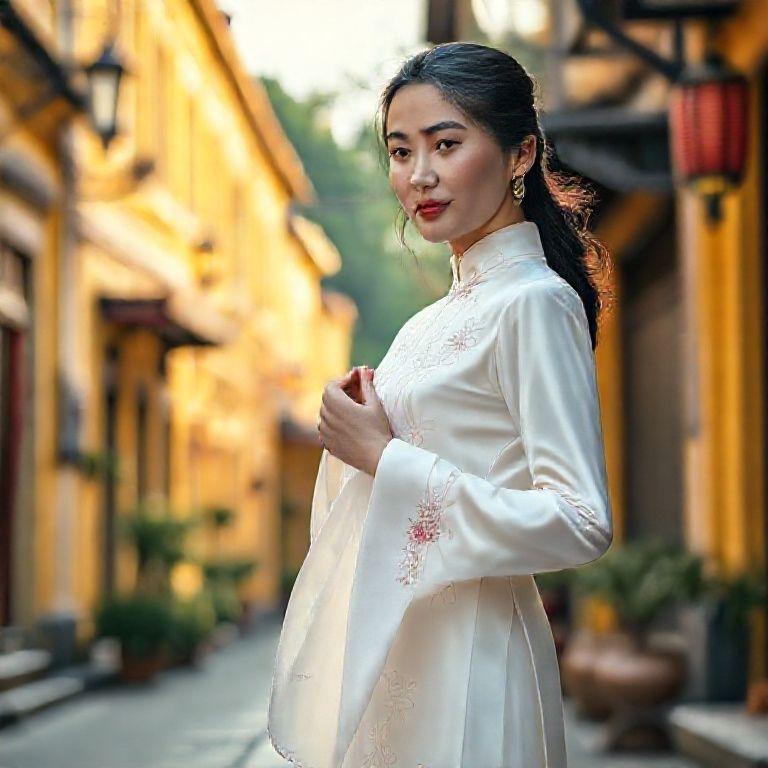
Picture a piece of clothing that moves like a gentle stream, feels as soft as a secret, and holds the heart of a country. This is the Áo Dài, Vietnam’s most important national dress. It is not just fabric you wear. It is a moving picture of the past, a sign of beauty, and a deep way to show who you are as a people. For hundreds of years, the beautiful shape of the Áo Dài has outlined the beauty of Vietnam’s scenery and its citizens. It changed from clothes for kings and queens to a modern sign of style. Its story is about bouncing back and changing, much like the story of Vietnam itself.
At Journey Vietnam, we love the stories sewn into the life of this nation. From the busy roads of Hanoi to the calm Mekong Delta river, the Áo Dài is always there, looking beautiful. People wear it proudly during Tết (Lunar New Year), at weddings and graduations, and by the polite women who greet guests everywhere. To know the Áo Dài is to know a key part of the Vietnamese way of seeing beauty and feeling spirit. Here, we will look at the deep history of this famous dress, see what it means to the culture, and show you the expert artists who can make your own special piece. This would be a one-of-a-kind keepsake that holds the soul of Vietnam. For more picture trips into Vietnam’s culture, visit our YouTube channel, @JourneyVietnam, where we show these stories.
The Start with Royals and Early Changes
The beginning of the Áo Dài is deep in the complicated mix of Vietnamese history. It was shaped by local styles and meetings with outsiders. Its first clear relative goes back to the 1700s under the Nguyen Lords in Hue. At that time, Lord Nguyen Phuc Khoat wanted his southern court to look different from the northern Trinh lords. He ordered a new style of dress for his officials and court people. This clothing, called the Áo Ngũ Thân (five-panel dress), is seen as the direct parent of today’s Áo Dài.
The Áo Ngũ Thân was a proper, loose tunic that showed Confucian ideas of good behavior. It usually had four main panels standing for the wearer’s parents and their spouse’s parents. A fifth, smaller panel underneath stood for the wearer. This design idea sewed family and social order right into the cloth. As historian Le Thi Nham Tuyet says in her work on Vietnamese clothes,
“The Áo Ngũ Thân was not just something to wear; it was a social book, talking about your place, your morals, and your spot in the world’s plan.”
Worn with loose pants, it was useful and respectful for both men and women of high class.
The 1900s Rebirth and Update
The Áo Dài we know now was created during a big wave of new ideas in the early 1900s. This was a time of heavy cultural sharing and national feeling. The key person in this change was the artist Cat Tuong (also called Le Mur). Inspired by Paris fashion in the 1930s, he redesigned the Áo Ngũ Thân. His design, named the Le Mur Áo Dài, used raglan sleeves. This is a diagonal seam from the armpit to the neck that got rid of shoulder wrinkles and made a much tighter shape. He also used brighter colors, moving away from dark ones.
But, the changes that happened next in the 1950s and 1960s, especially in Saigon, really set the Áo Dài as a symbol. Designers like Thai Thuc Nhu and Dung tailored the dress even more. They made it fit closely from the neck to the hips before it split into two flowing parts. This design highlighted a woman’s shape with great beauty. It became a sign of the modern, educated Vietnamese woman.
Fashion expert Gioi Tre writes, “The Saigon Áo Dài of the 1960s became a strong, silent shout of national pride and women’s power during a hard time. It was both old-fashioned and boldly new.”
This time saw the Áo Dài worn by students, teachers, and workers. It became a true national uniform of beauty and smarts.
Meaning Sewn in Silk and Thread
Every part of the Áo Dài is filled with meaning. This turns it from a simple dress into a story-telling garment. The biggest meaning is in its build. The long, flowing parts are often said to show the graceful lines of bamboo or a palm tree. These plants are tied to Vietnamese strength and beauty. The high, closed collar means modesty and respect. The tight top part celebrates quiet beauty, not loud attraction.
Fabrics and colors tell their own tales. Silk, the most traditional and valued material, means luxury, fine taste, and a link to Vietnam’s old silk-making history. Lãnh Mỹ A silk from the Mekong Delta, or Van Phuc silk from Hanoi, are especially famous. Colors are picked with thought:
- White for purity, often worn by students.
- Red for luck, joy, and parties (common at weddings).
- Yellow and Gold for royalty and wealth.
- Blue for peace and steadiness.
Sewn designs might have lotus flowers (purity growing from mud), cranes (long life), or bamboo (honesty). Each stitch adds a layer of cultural poetry to the clothing.
The Áo Dài in Today’s Vietnamese Life
Now, the Áo Dài has moved past its old jobs to become a flexible and active sign of Vietnam. It is a must-have part of big life events and national holidays. During Tết, families wear their finest Áo Dài to visit temples and family. The bright colors match the spring flowers. It is the top wedding dress for many Vietnamese brides, often in bright red or gold, meaning a hopeful future.
Beyond parties, the Áo Dài has a solid spot in modern work and art life. It is the official uniform for women working at many hotels, airlines (like Vietnam Airlines), and banks. This shows an image of beautiful hospitality. Designers keep reinventing it for fashion shows. They try fabrics like leather, lace, or even denim, and add modern patterns. But, even in its most new-age forms, the basic shape—the soul of the Áo Dài—stays clear. This shows its never-ending good design.
How to Find a Master Tailor for Your Custom Áo Dài
Owning a custom-made Áo Dài is a memorable event. It is a shared art project between you and a skilled maker. The process starts by picking a good tailor. In Hanoi, the Old Quarter is full of them. Look for shops on Hang Gai Street (Silk Street), where families of tailors have worked for years. Well-known places like Áo Dài 74 or Thuyet Design are famous for their quality and old-style methods.
In Ho Chi Minh City, go to areas like District 1 or District 3. Tailors on Dong Khoi Street or near the Central Post Office often work with visitors from other countries and speak good English. For a more local feel, find tailors in Hoi An, the old trading port. The town is known for its hundreds of tailor shops. You can pick from a huge selection of silks and get a dress made in 1-2 days. Yaly Couture and Be Be Tailor are some of the most famous and trusted choices there. Remember, a good tailor will take a lot of time on measurements and several fittings to make sure it is perfect.
The Ritual of the Fitting and Picking Your Fabric
Making a custom Áo Dài is a ceremony. Your first visit involves very detailed measurements. These are not just normal ones, but exact shapes of your body so the dress fits like another layer of skin. You will then see an amazing selection of fabrics. This is where your personal trip with the Áo Dài really starts. Feel the weight and shine of pure silk, the sharpness of linen for a modern look, or the airiness of chiffon.
Next, you choose the color and design. Do you want one solid, classy color for formal times? Or a fabric with soft cherry blossoms or old chữ Nôm (ancient writing) patterns? The tailor will suggest what works best for the style you want. A normal order has at least two fittings: one to try on the loosely-stitched garment for big changes, and a last fitting to perfect the bottom edge and fasteners. The traditional hidden buttons (khuy bấm) from the neck to under the arm are a mark of top-quality work.
Wearing and Looking After Your Áo Dài
Wearing an Áo Dài the right way is part of honoring its beauty. It is always worn with long, wide-legged pants underneath. These are usually in a matching or nice white fabric. The pants should be high-waisted and fit smoothly. When you move, the two front and back parts of the tunic flow nicely, showing little bits of the pants. This design is both proper and attractively beautiful.
Caring for your Áo Dài, especially if it is silk, is very important for it to last. It is best to have it cleaned by a professional. If you must wash it by hand, use cold water with a gentle soap made for delicate things. Never twist the silk. Instead, gently push the water out and lay it flat on a towel to dry, away from direct sun which can lighten the colors. Store it on a soft hanger to keep its shape. Avoid folding it tightly to stop permanent wrinkles. With good care, an Áo Dài can be a loved treasure for many years.
The trip of the Áo Dài, from the royal courts of Hue to the world fashion scene, is a reflection of Vietnam’s own lively story. It is clothing that has gracefully carried the weight of history while changing with the beat of today. To own a custom-made Áo Dài is not just to get a pretty item of clothing. It is to take part in a living tradition, to wear a piece of Vietnamese art and spirit. It connects you to the skilled hands of the tailor, the rich meaning of its design, and the never-fading beauty that defines Vietnamese culture of appearance.
We ask you to look deeper into the fascinating world of Vietnamese traditions with us. Find more stories, travel tips, and cultural looks on our website, JourneyVietnam.top. Also, subscribe to our YouTube channel, @JourneyVietnam. There, we explore the beauty of the Áo Dài and many other wonders across this amazing country in pictures. Let your journey into the heart of Vietnam start.