
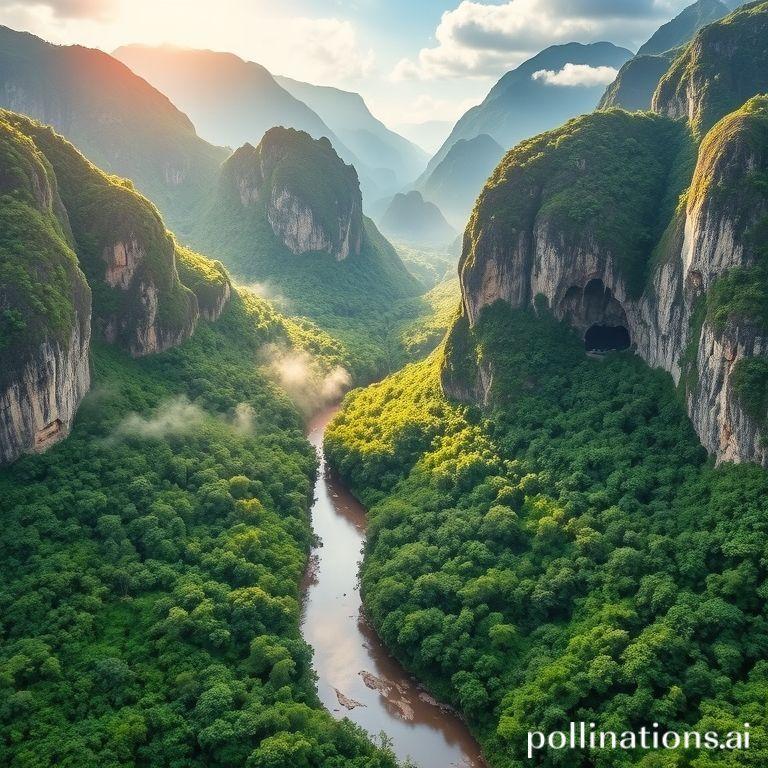
Imagine Earth as a giant history book, and deep in Vietnam’s green mountains, you’ll find some of its most amazing pages—the Phong Nha Caves. This special place, protected by UNESCO, is home to the world’s biggest caves, including the enormous Son Doong Cave, which is so huge it even has its own weather inside! For people who love adventure and nature, exploring this national park is like taking a journey into the very heart of our planet’s hidden wonders.
The park has over 300 caves and tunnels that form one of Earth’s most impressive limestone landscapes, shaped over 400 million years. Beyond their massive size, these caves hold untouched natural worlds, ancient fossils, and stunning rock formations that tell the story of how our planet changed over time. As Journey Vietnam’s exploration team found during their recent trip, this is where exciting adventure meets mind-blowing natural beauty.
In this helpful guide, we’ll walk you through everything you need to know to experience Phong Nha’s underground marvels—from practical planning tips to the most amazing caves you can explore. Whether you’re an experienced cave explorer or trying this for the first time, get ready to discover why this place should be at the top of your travel wish list.
Understanding How Phong Nha’s Caves Formed
Phong Nha’s incredible cave system exists because of special geological conditions that have been shaping these underground masterpieces for millions of years. The park sits on one of Asia’s biggest limestone formations, covering about 2,000 square kilometers along a mountain range.
The creation process started about 400 million years ago when this area was underwater in an ancient ocean. Sea creatures and sediments piled up and eventually turned into huge limestone deposits. When tectonic forces pushed these formations above water, rainwater—which becomes slightly acidic from absorbing air—began dissolving the limestone, creating the first cracks that would become today’s enormous cave systems.
What makes Phong Nha extra special is the combination of pure limestone, heavy rainfall, and powerful rivers that have been carving through the rock for ages. British cave expert Howard Limbert, who has led many trips here, explains:
“The limestone here is exceptionally pure—over 95% calcium carbonate. This lets water dissolve the rock more effectively, creating bigger passages and more spectacular formations than most other cave areas.”
Explorers are still finding new caves here, showing that this geological masterpiece continues to reveal its secrets. As recently as 2022, they documented several previously unknown caves, adding to the park’s already amazing collection of underground wonders.
Planning Your Phong Nha Adventure: Key Tips
Good planning turns a decent cave adventure into an unforgettable experience. The best time to visit Phong Nha is from February to August when weather conditions are best. The dry season (February to April) gives perfect conditions for cave exploration, with lower humidity and little rainfall that keeps river levels manageable.
Getting to Phong Nha usually involves traveling to Dong Hoi City, which has both a train station and airport with connections from major Vietnamese cities. From Dong Hoi, it’s about 45 minutes by road to Phong Nha Town, which serves as the gateway to the national park. Journey Vietnam’s travel guides recommend spending at least 3-4 days to properly experience the area’s highlights.
Essential gear includes sturdy waterproof hiking shoes, quick-dry clothing, a headlamp (for darker caves), and waterproof bags for electronics. While some caves require special equipment and guides, many are accessible with basic preparation. Permits are needed for most caves, and certain ones like Son Doong have limited access through licensed tour companies.
Places to stay range from budget hostels to luxury eco-resorts, with most visitors staying in Phong Nha Town. Booking ahead is recommended during busy season. Local tour companies offer packages ranging from day trips to multi-day expeditions, with options for different fitness levels and interests.
Son Doong Cave: The World’s Biggest Cave
Son Doong Cave is the crown jewel of Phong Nha’s underground network and indeed the entire caving world. Discovered in 1991 by local man Ho Khanh but properly explored only in 2009 by British cavers, this massive cavern stretches over 5 kilometers long with sections reaching 200 meters high and 150 meters wide—large enough to hold a 40-story building.
The size of Son Doong is hard to understand until you’re standing inside it. The cave contains its own jungle ecosystem where sunlight streams through collapsed sections, allowing trees up to 30 meters tall to grow inside the cave. These underground jungles create surreal landscapes where mist rises through sunlight beams, making what explorers describe as otherworldly atmospheres.
Access to Son Doong is strictly controlled through Oxalis Adventure, the only licensed company for expeditions. The 4-day, 3-night trek involves camping inside the cave, crossing underground rivers, and seeing formations like the Great Wall of Vietnam—a 90-meter calcite barrier that requires climbing equipment to cross. With only 1,000 visitors allowed each year and costing $3,000 per person, this remains one of the world’s most exclusive adventures.
Even if you don’t do the full Son Doong expedition, learning about this geological marvel helps you understand the whole Phong Nha system. As one caver described it:
“Exploring Son Doong feels like discovering a lost world—every turn shows you something that challenges what you thought was possible underground.”
Paradise Cave: The Underground Palace
For those wanting accessibility without losing wonder, Paradise Cave offers what many consider the most beautiful cave experience in Vietnam. Discovered in 2005, this 31-kilometer-long cave features a 1-kilometer section open to visitors via wooden walkways that make exploration comfortable while protecting the delicate environment.
The name Paradise proves perfect when you enter the main chamber, where spectacular formations create what looks like an underground palace. Stalactites and stalagmites form elaborate structures that sparkle under carefully placed lighting. Some formations extend over 60 meters from ceiling to floor, with shapes that spark the imagination—you’ll see formations resembling fairy-tale castles, mythical creatures, and natural sculptures that took millions of years to form.
Unlike some caves that need strenuous hiking, Paradise Cave’s developed section is accessible to most fitness levels. The temperature stays a comfortable 20-21°C year-round, making it a nice escape from Vietnam’s tropical heat. For more adventurous visitors, Oxalis offers a 7-kilometer trek through undeveloped sections of the cave, involving swimming, climbing, and exploring areas few tourists ever see.
Photography opportunities here are exceptional, particularly in the early morning when fewer visitors are present. The cave’s lighting shows the incredible variety of formations, from delicate straw stalactites to massive columns that support the cavern ceiling. It’s no wonder Paradise Cave consistently ranks among Vietnam’s top natural attractions.
Phong Nha Cave: The River Cave Experience
Phong Nha Cave gives the entire system its name and offers a unique experience as one of the few caves reached mainly by boat. The journey begins with a scenic 30-minute boat ride along the Son River, passing limestone cliffs and rural landscapes before entering the cave’s massive opening, which reaches 100 meters wide and 80 meters high.
Inside, the boat navigates 1.5 kilometers through lit chambers filled with impressive formations. The cave extends nearly 8 kilometers inland, though only the first section is accessible to tourists. The combination of reflected light on water and dramatic ceiling formations creates magical visual effects that change throughout the day as sunlight angles shift.
What makes Phong Nha Cave historically important are the Cham inscriptions dating back to the 9th century, showing this cave has been visited for over a thousand years. During the American War, the cave served as a hospital and ammunition storage facility, protected by its massive limestone walls from bombing campaigns.
After the boat journey, visitors can get off and explore dry sections of the cave on foot, including areas with exceptional sound where guides sometimes show the cave’s natural echo. The return boat trip offers different views of formations as lighting conditions change, making afternoon visits particularly good for photos.
Dark Cave: Adventure and Mud Baths
For those seeking active adventure, Dark Cave delivers an experience combining caving, ziplining, swimming, and unique natural mud baths. The adventure begins with a 400-meter zipline across the Chay River directly into the cave entrance—an exciting start that sets the tone for what follows.
True to its name, Dark Cave lives up to its title once you’re past the entrance. Visitors wade and swim through sections of the cave using headlamps to navigate, creating a real exploration feeling. The main attraction is the natural mud bath deep within the cave—a chamber filled with thick, mineral-rich mud that’s so buoyant you can float easily.
The mud experience is both fun and therapeutic, with many visitors covering themselves entirely in the cool, smooth mud before rinsing in the cave’s freshwater pool. Beyond the mud chamber, the cave extends several kilometers with sections needing technical equipment to explore fully.
Dark Cave represents the more adventurous side of Phong Nha exploration, perfect for travelers who want to combine natural wonder with physical activity. The experience typically takes 2-3 hours and is suitable for most ages and fitness levels, though those uncomfortable with darkness or swimming might prefer other caves.
Protecting the Caves for the Future
The huge popularity of Phong Nha’s caves brings both opportunities and challenges for conservation. As visitor numbers have grown from a few thousand annually in the early 2000s to over 1 million today, managing human impact has become increasingly important for preserving these fragile ecosystems.
The national park administration, working with tour companies and international organizations, has put several conservation measures in place. These include limiting daily visitor numbers to sensitive caves, maintaining designated pathways to prevent damage to formations, and using LED lighting systems that minimize impact on cave environments. All tour companies must follow strict rules regarding waste management and environmental protection.
Local communities have become vital partners in conservation efforts. Many former farmers now work as cave guides, porters, or hospitality staff, creating economic reasons for protecting the natural environment. Community-based tourism initiatives ensure that benefits from tourism reach local residents while maintaining cultural traditions.
Visitors can help conservation by choosing responsible tour companies, following all guidelines during cave visits, and supporting local businesses. As Journey Vietnam advocates in our sustainable travel initiatives:
“The privilege of experiencing these natural wonders comes with responsibility—to tread lightly, respect regulations, and ensure these masterpieces remain intact for future generations.”
Beyond the caves themselves, the national park protects one of Vietnam’s most important areas of wildlife variety, including endangered species like the Sao la antelope and over 800 vertebrate species. Protecting the whole ecosystem ensures the caves’ long-term preservation, as surface forests directly influence underground water quality and geological processes.
Exploring Phong Nha’s caves offers more than just adventure—it’s a chance to witness geological history, experience pristine natural environments, and understand the importance of conservation. From the world’s largest cave to accessible wonders that delight all visitors, this destination represents one of Southeast Asia’s most remarkable natural attractions.
As our Journey Vietnam team can confirm from multiple expeditions, the memories created here last a lifetime. The sense of wonder when standing in caverns large enough to contain city blocks, the beauty of formations that took millennia to create, and the thrill of exploration make Phong Nha an essential destination for any serious traveler.
We invite you to experience these wonders for yourself and encourage you to share your adventures with our community at Journey Vietnam. Visit our website at https://journeyvietnam.top for more detailed guides, or subscribe to our YouTube channel at https://www.youtube.com/@JourneyVietnam for visual tours of these incredible caves. The underground world of Phong Nha awaits—ready to reveal its secrets to those willing to venture beneath the surface.