Picture waking up to water gently tapping against wooden poles, like a soft drumbeat, with boat motors humming in the distance and sellers calling out from their small boats filled with fresh fruit. This is the Mekong Delta, Vietnam’s huge food factory and an amazing water world where daily life happens on the river. Covering over 40,500 square kilometers in southwest Vietnam, the Delta is like a giant maze of rivers, wetlands, and islands. It is home to more than 17 million people whose lives move to the rhythm of the powerful Mekong River.
People often call it the Nine Dragon River Delta because it has nine main branches. This area is not only a farming superstar—growing more than half of Vietnam’s rice—but also a place full of culture and history. From the famous floating markets that have been busy for hundreds of years to peaceful boat trips that show off quiet country views, the Mekong Delta lets you see a way of life that is both old and full of energy. Here, houses stand on poles above the water, kids paddle to school, and people meet on boats for shopping and chatting.
In this article, we explore the heart of the Mekong Delta, including its lively floating markets, magical river tours, and the strong spirit of its people. Whether you are a traveler looking for excitement or someone who loves learning about culture, the Delta guarantees a trip you won’t forget. And for more stories and videos, visit Journey Vietnam and subscribe to our YouTube channel, where we show the wonders of Vietnam.
The Floating Markets: Centers of Trade and Community
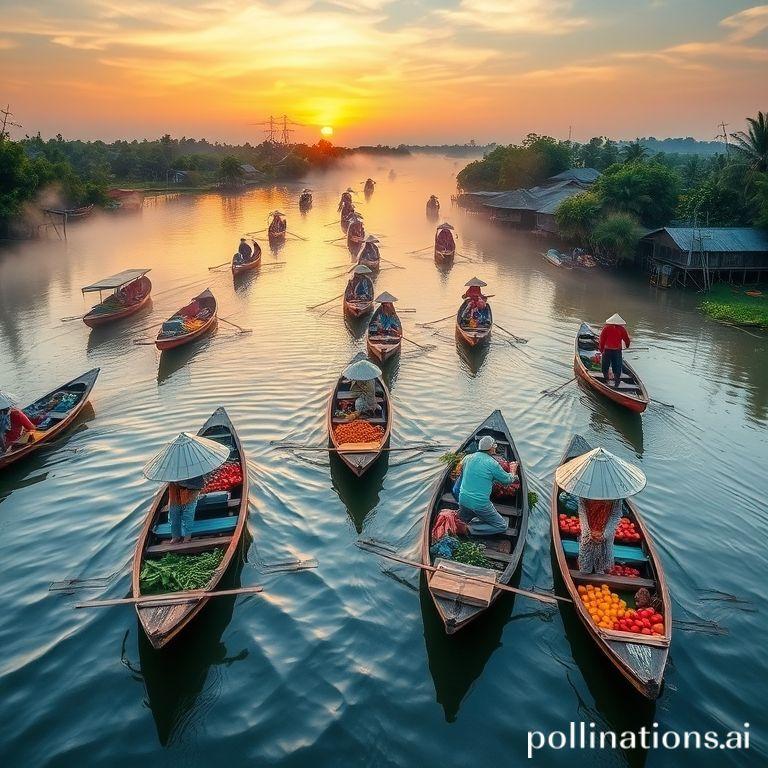
Early in the morning, the Mekong Delta comes alive with noise from its floating markets. The most well-known are Cai Rang near Can Tho and Phong Dien farther up the river. These markets are not just for buying and selling; they are bright, cultural gathering spots where families have sold things like pineapples, coconuts, and home items from their boats for generations. The view is a burst of colors—boats painted in bright shades loaded with goods, with samples hanging from tall poles to show what they are selling.
The biggest and most popular, Cai Rang Floating Market, is open from 5 AM to noon, with hundreds of boats crowding together. As one seller said,
We begin our day when the sky is still dark. The water is our highway, and our boat is our store.
This market shows how clever the Delta people are, where business happens as smoothly as the river flows. Visitors can rent a small boat to move through the busy scene, drinking fresh coconut water or trying local foods like hu tieu noodles served right on the water.
Besides selling, these markets are social centers. Families catch up, share news, and keep traditions alive. For example, hanging goods on poles is an old trick that lets buyers spot sellers from far away. As the sun comes up, the smell of pho soup and coffee cooking on floating kitchens fills the air, giving a real taste of life in the Delta. These markets are slowly disappearing because of new roads, so they are a precious piece of history to see now.
River Tours: Discovering the Delta’s Secret Treasures
Exploring the Mekong Delta by boat is the top way to find its hidden gems. River tours can be short rides in narrow canals or longer trips that cover the whole water network. One of the most magical experiences is floating through the small canals of the Delta, where coconut palm leaves create green tunnels above, and the only noises are oars dipping and animals chatting.
Common starting spots for tours are Can Tho, My Tho, and Ben Tre, each giving a different view. In My Tho, tours often include stops at coconut candy shops and bee farms on small islands. In Ben Tre, called the home of coconuts, you can see how people make things from every part of the coconut tree. As you sail, you’ll pass houses on poles where families wave hello, and kids learn to row—a skill they need every day.
For a closer look, try a homestay tour, where you sleep by the river and join in activities like fishing or picking fruit. The Delta’s nature is amazing; it’s a place with over 1,000 kinds of animals and plants. Watch for shiny kingfishers and water lilies growing in the wetlands. As one guide said,
The river is our lifeline. It gives us food, travel, and beauty every day.
These tours not only show the scenery but also help local people by encouraging respectful tourism.
Country Life: The Core of the Mekong Delta
Away from the markets and tours, the real soul of the Mekong Delta is in its village life, where days follow the seasons. Here, farming is king: wide rice fields shine green, fruit trees overflow with durian, mango, and longan, and fish farms sit on the water. The Delta people are known for their toughness, adjusting to yearly floods that help the land but also bring problems.
Daily life mixes old ways with new. Many families still live in houses on poles, with boats instead of cars. Children learn to swim early, and schools often have docks instead of yards. Community is key; holidays like the Ong Temple Festival honor river gods with boat races and gifts for good crops. Food is a highlight: try ca loc nuong trui (grilled snakehead fish) or banh xeo (crispy pancakes), often eaten under the stars with shared stories.
But country life faces dangers from climate change and city growth. Rising oceans and dams built upriver change water levels, hurting farms and jobs. Still, the spirit remains strong. Groups are helping locals with earth-friendly methods, like organic farming and eco-tours, to keep this lifestyle going for the future. Visiting these areas gives a humble look at a world where living with nature is a must, not an option.
Food Adventures: A Bite of the Delta
The Mekong Delta is a heaven for food fans, with cooking shaped by the river and land’s plenty. Freshness is everything: meals often have ingredients picked just hours before. Must-try foods include hu tieu, a noodle soup with pork and seafood, and banh canh, a thick noodle dish in a rich soup. Street food is everywhere, from grilled clams on the shore to sweet snacks like che (dessert soup) made with local fruits.
Floating kitchens on boats serve quick treats—think eating a spring roll while floating by lotus ponds. The Delta is also famous for its fruits; taste rambutan, mangosteen, and strong-smelling durian, often named the king of fruits. For a hands-on time, join a cooking lesson in a village home, where you’ll learn to make dishes the traditional way. As a local cook explained,
Our food tells the river’s story. Every mouthful has the flavor of water and sun.
Don’t miss the Delta’s drinks: sugar cane juice, fresh coconut water, and strong Vietnamese coffee, often enjoyed in cozy cafes by the water. These food experiences are not just about eating; they’re a way to bond with the culture and people, making them a highlight of any visit.
Cultural Ways and Celebrations
The Mekong Delta’s culture is a rich mix of Khmer, Chinese, and Vietnamese styles, seen in its festivals, music, and crafts. Big events like Chol Chnam Thmay (Khmer New Year) and Tet (Lunar New Year) are celebrated with energy, featuring dragon dances, floating lights, and group meals. Traditional music, like don ca tai tu (southern folk music), often played on boats, echoes the area’s artistic heart.
Handicrafts are another cultural pillar. Visit villages where artists weave water plants into baskets or make pottery from river mud. These crafts are not just souvenirs; they are jobs kept alive over generations. The Delta’s spiritual life is lively too, with many temples, pagodas, and churches scattered around, each sharing tales of faith and togetherness.
Joining a local festival or workshop offers deep looks into the Delta’s identity. It’s a chance to see how traditions change but stay rooted, like the trees that hold the riverbanks. These cultural parts make the Mekong Delta not just a place to see, but a place to feel and remember.
Getting Ready for Your Trip: Advice for Visitors
To enjoy your Mekong Delta adventure, plan carefully. The best time to come is the dry season from December to April, when water is calm and markets are active. Start in a central city like Can Tho, where you can easily book boat tours. Pack light, airy clothes, a hat, and sunscreen—the tropical weather can be hot.
Think about hiring a local guide for real experiences; they can take you through hidden canals and introduce you to families. Respect nature: avoid plastic trash and choose earth-friendly tours. For places to stay, options include fancy river cruises or simple homestays, each giving different views. And recall, the Delta is huge—plan for at least 3-4 days to explore well.
For more ideas and detailed guides, visit Journey Vietnam and our YouTube channel, where we share videos that capture the Delta’s wonder. From sunrise market tours to cooking shows, we bring you nearer to this amazing region.
As we finish our trip through the Mekong Delta, it’s clear that this is more than a place—it’s a living, breathing world where water guides every part of life. From the energetic floating markets that buzz at dawn to the calm river tours that show hidden natural beauty, the Delta offers a special view into Vietnam’s soul. The village communities, with their strength and kindness, remind us how key it is to live with nature, especially when the environment is changing.
Main points include the Delta’s job as a farming core, its rich cultural blend, and the important need to save its traditions from modern changes. Whether you’re enjoying a bowl of hu tieu on a boat or watching the sun set over rice fields, the memories here stick with you. We hope this article encourages you to explore the Mekong Delta and find its marvels yourself. For more tales and visual journeys, follow Journey Vietnam—your door to the real Vietnam.