
Hanoi is the heart of Vietnam. It is a city where old history and new energy meet, like two rivers flowing together. It is more than just a capital city. It is a living museum, a food lover’s dream, and a story about the strong and graceful spirit of the Vietnamese people. For any traveler, finding your way through its busy life to discover the city’s soul is an important step. This guide collects the most important parts of Hanoi into ten must-see experiences. These range from its calm lakes and holy temples to the exciting maze of its Old Quarter. Come with us on a trip through the places that define this ancient city. Discover why Hanoi charms every visitor who walks its historic streets. For more stories and video tours of Vietnam’s wonders, visit Journey Vietnam and subscribe to our YouTube channel @JourneyVietnam.
The Spiritual Heart: Hoan Kiem Lake and Ngoc Son Temple
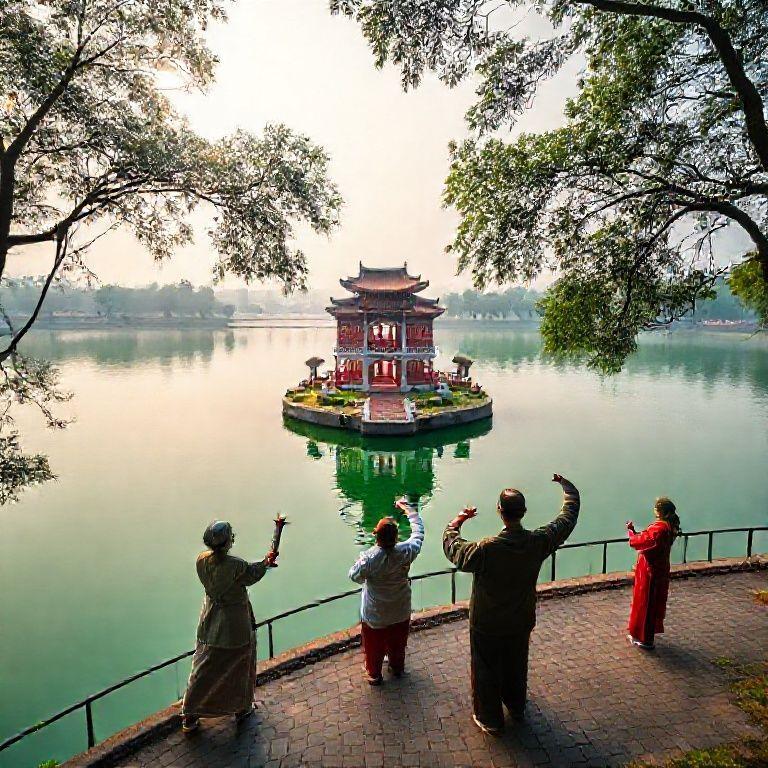
You cannot visit Hanoi without a peaceful walk around Hoan Kiem Lake, the famous “Lake of the Restored Sword.” This green oasis in the city’s center is full of story. The legend says Emperor Le Loi was given a magic sword by the Golden Turtle God to fight off invaders. After winning, a giant turtle took the sword back from the lake’s water, giving the lake its name. The lake is a center of local life, especially at sunrise when people practice tai chi, and in the evenings when it becomes a social spot. At its north end, the famous red Huc Bridge leads to Ngoc Son Temple, sitting on a small island. The bridge, meaning “Morning Sunlight Bridge,” is a symbol of Hanoi. The temple is dedicated to a scholar, a general, and a Confucian teacher. It offers a quiet place to think. A preserved giant turtle, a species sacred to the legend, is also kept here. As historian Nguyen Van Huy notes,
“Hoan Kiem Lake is not just a body of water; it is the spiritual and cultural soul of Hanoi, where legend and daily life intertwine.”
This smooth mix of story, nature, and community makes it the perfect first stop for any visit.
The Historic Maze: Hanoi’s Old Quarter
Step into the busy, chaotic, and totally captivating Hanoi Old Quarter. This is a network of 36 streets that has been the city’s shopping heart for over a thousand years. Each street used to focus on one type of trade, a tradition you can see in names like Hang Bac (Silver Street) and Hang Gai (Silk Street). Today, the area is a flood for your senses. Narrow lanes are packed with shops, food stalls, old French buildings, and motorbikes. It is a place where you can buy anything from traditional hats to modern souvenirs, all while soaking in the lively feeling. The buildings are a mix of narrow “tube houses”—built deep and thin because of old taxes—and faded French building fronts. Exploring the Old Quarter is best done on foot. This lets you find hidden treasures like old meeting halls, small family restaurants serving Pho, and colorful markets. As you walk, you will see the endless energy of Hanoi. This area perfectly shows the city’s ability to keep its ancient trading spirit while moving at the fast speed of modern life.
A Tribute to Uncle Ho: Ho Chi Minh Mausoleum and Complex
A visit to the Ho Chi Minh Mausoleum is a deep and serious experience. It helps you understand the great respect held for Vietnam’s founding father, Ho Chi Minh. Located in Ba Dinh Square, where he read the Declaration of Independence in 1945, the large stone mausoleum holds his preserved body. Visitors must follow a strict dress code and act respectfully—no shorts, tank tops, or loud talking. The experience is one of quiet thought as you walk in a line through the cool, dim inside. Next to the mausoleum is the Ho Chi Minh Complex. This includes his Stilt House, a simple wooden building where he lived and worked from 1958 to 1969. It shows his belief in a simple, connected life. Nearby, the Presidential Palace, a grand French building, stands in contrast to his humble home. The One Pillar Pagoda, a copy of an 11th-century Buddhist temple, is also within the complex. Official visitor data shows the site gets millions of visitors every year, proving its national importance. This complex is not just a political site. It is a place to understand the man behind the story and the ideas that built modern Vietnam.
The Seat of Learning: Temple of Literature
Escape the city’s noise at the Temple of Literature, Vietnam’s first national university. It was founded in 1070 by Emperor Ly Thanh Tong. Dedicated to Confucius, this beautifully kept complex is a peaceful haven of courtyards, gardens, and ancient pavilions. It was started to teach the sons of nobles about Confucian ideas and later became a university for smart students from across the country. The building style is a classic example of Vietnamese design. Its five courtyards in a row stand for the path of a scholar. The third courtyard has the famous Doctor’s Stone Steles. These are 82 stone turtles carrying the names of top exam winners from 1442 to 1779. These steles are recognized as a UNESCO World Documentary Heritage and are priceless historical records. The fourth courtyard leads to the main sanctuary, housing altars to Confucius and his students. The final courtyard once held the actual university building. Today, the temple is a symbol of Vietnam’s lasting respect for education. It is a popular spot for students looking for good luck before tests and for tourists enjoying its history and beauty. As scholar Phan Huy Le said,
“The Temple of Literature represents the best of Vietnamese feudal education and the high value placed on knowledge and earning your place.”
Colonial Grandeur and Artistic Soul: The French Quarter and Opera House
South of Hoan Kiem Lake lies the French Quarter. This area has wide, tree-lined streets and grand old French buildings that tell the story of Hanoi under French rule. The main attraction is the beautiful Hanoi Opera House, built between 1901 and 1911 and modeled on a famous opera house in Paris. This iconic yellow building is a masterpiece of Neoclassical design and is still the city’s top place for ballet, opera, and classical music. Taking a tour or seeing a show here is a must. Around the opera house are other colonial landmarks like the historic Metropole Hotel and grand buildings now used by the government. Walking down Trang Tien Street, you will find nice shops and the famous Trang Tien Ice Cream parlor, a local favorite. This area has a different speed and look from the Old Quarter. It shows Hanoi’s layered history and its more polished cultural side. It is a reminder of the city’s complicated past and its ongoing change as a cultural capital.
Cultural Immersion at the Vietnam Museum of Ethnology
To understand the amazing variety of Vietnam, a visit to the Vietnam Museum of Ethnology is key. Located in the Cau Giay district, this top-quality museum offers a deep look into the culture, customs, and daily life of Vietnam’s 54 recognized ethnic groups. The indoor display rooms are carefully arranged. They show traditional clothing, tools, religious objects, and detailed models of rituals like weddings and festivals. The real highlight, however, is the large outdoor area. Here, full-size copies of traditional houses from different ethnic groups are built using original materials and methods by people from those communities. Visitors can go inside these houses, getting a real feel for different building styles. The museum also has water puppet shows, craft demonstrations, and hands-on activities. As museum director Dr. Vo Quang Trong states,
“Our mission is to preserve and promote the cultural heritage of all Vietnamese ethnic groups, building understanding and pride in our national mix.”
It is an educational and fun experience that gives important background to the cultural fabric of the whole country.
Sacred Peace at Tran Quoc Pagoda
On a small piece of land sticking into West Lake, Hanoi’s largest lake, sits Tran Quoc Pagoda. This is the oldest Buddhist temple in the city, from the 6th century. Its name means “Stabilizing the Nation,” showing its historical importance. The pagoda is a stunning example of Vietnamese Buddhist building. It has multi-level towers, a grand Bodhi tree given from India, and a peaceful courtyard filled with stone statues. The main feature is the 11-story stupa, with a statue of Buddha on each floor. The red lacquer and detailed work of the main sanctuary are amazing. The pagoda’s spot on West Lake gives beautiful views, especially at sunset, making it popular for both prayer and photos. It is still an active place of worship, with monks and nuns living there. The calm feeling here, with the sound of chanting and the soft sound of lake water, is a strong contrast to the city’s rush. It is a spiritual safe place that has seen over a thousand years of Hanoi’s history.
A Journey Through History: Hoa Lo Prison Museum
Hoa Lo Prison, given the ironic nickname “Hanoi Hilton” by American prisoners during the Vietnam War, offers a serious but necessary look into Vietnam’s difficult past. It was first built by the French in the late 1800s to imprison Vietnamese revolutionaries. Later, North Vietnam used it for captured American pilots. The museum today focuses heavily on the harsh conditions faced by Vietnamese patriots under French rule. Displays include tiny cells, leg chains, and a guillotine used for executions. The section on the American prisoners tells a different story, stressing their “humane treatment.” This difference makes Hoa Lo a powerful place of conflicting memories. Walking through the dark halls and seeing these objects is a chilling experience. As historian Lady Borton notes,
“Places like Hoa Lo force us to face the complex, often painful layers of history that shape a nation’s identity.”
It is not a comfortable visit, but it is an important one for understanding the strength and suffering that are part of Vietnam’s story.
The Local Pulse: Dong Xuan Market and Street Food
To feel the true heartbeat of Hanoi, you must jump into its market life and famous street food scene. Dong Xuan Market is the largest covered market in the city, located in the Old Quarter. It is a huge, multi-floor maze selling everything from fresh fruits and fish to clothes, electronics, and souvenirs. The ground floor is a lively, noisy show of local buying and selling. For the best food adventure, however, the streets around the market are where the magic happens. Hanoi is likely the street food capital of the world. Pull up a tiny plastic stool and enjoy classic dishes: a steaming bowl of Pho Bo (beef noodle soup) from a family stall that’s been there for decades, a crispy Banh Mi (Vietnamese sandwich), savory Bun Cha (grilled pork with noodles), and the famous Ca Phe Trung (egg coffee) for dessert. Exploring with a local guide, like those on our Journey Vietnam YouTube channel, can help you find hidden gems and stories behind each dish. This is where you eat like a person from Hanoi, surrounded by the sounds, smells, and unstoppable energy of the city.
Artistic Escape and City Views at the Vietnam Fine Arts Museum
End your time in Hanoi with a visit to the Vietnam Fine Arts Museum. It is housed in a beautifully fixed-up French building that was once a school for girls. The museum has a complete collection of Vietnamese art from ancient times to today. The displays are organized by time and theme. They show ancient bronze drums, Cham sculpture, Buddhist art from old dynasties, folk paintings, and modern art from the 20th century. The collection of lacquer paintings, a style where Vietnamese artists have become world-famous, is especially good. The museum offers a quiet, thoughtful space to appreciate the artistic growth of the nation. From its upper floors, you can also enjoy nice views over the nearby streets. It is a cultural finishing point that adds to the historical and sensory experiences of the city. It gives depth and meaning to the creative spirit of Vietnam. For more video tours of Vietnam’s cultural treasures, visit our website.
Hanoi is a city that shows itself in layers, like an onion. From the calm surface of Hoan Kiem Lake to the busy depths of the Old Quarter, and from the serious halls of the Mausoleum to the happy chaos of a street food stall. These ten key experiences give you a map to its many-sided soul. They connect you to a history of emperors and revolutionaries. They connect you to a culture that respects both scholars and food sellers. They connect you to a present that is full of life and endlessly interesting. Each place tells a part of Hanoi’s story, but the real magic is in the moments in between—the smile from a local, the surprise find, the taste of a perfect bowl of pho. We hope this guide encourages your own journey of discovery. To see these places come to life and to find more hidden spots in Vietnam, we invite you to join our community. Subscribe to Journey Vietnam on YouTube for amazing video stories, and visit Journey Vietnam Top for detailed guides and travel ideas. Your adventure into the heart of Vietnam starts here.