
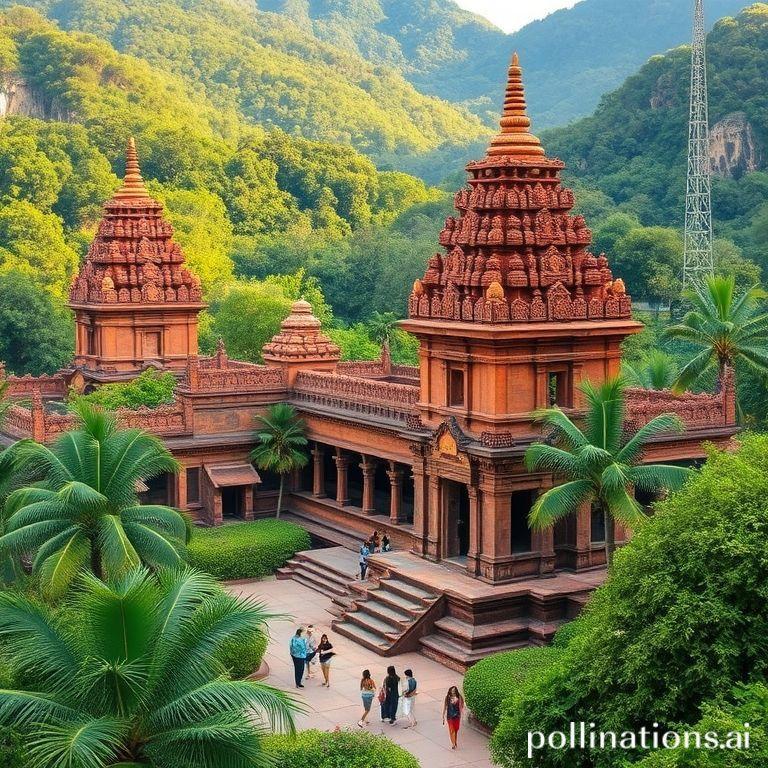
Imagine a hidden world in the mountains of Vietnam, where ancient temples stand like forgotten memories. This is My Son Sanctuary, a special place that tells the story of the Champa Kingdom. Like a history book written in stone and brick, this UNESCO World Heritage site shows us how people lived and worshipped from the 4th to the 13th centuries.
The Champa people built these Hindu temples as their spiritual home, much like a family might build their dream house over many years. Each generation added something new, creating layers of history like rings in a tree trunk. These temples were both churches and royal burial grounds, where kings connected with the gods.
The Rise and Fall of a Kingdom
The story begins around 1,800 years ago, when the Cham people created kingdoms along Vietnam’s coast. Think of their culture as a beautiful recipe that mixed Indian traditions with their own local flavors. The first temples appeared in the 4th century, like seeds planted by King Bhadravarman.
The most glorious years were between the 7th and 10th centuries, when the kingdom was at its strongest. Each king tried to build more impressive temples than the last, like siblings competing to build the best sandcastle. A French explorer named Henri Parmentier later discovered that the temples came in eight main groups, each telling a different chapter of the story.
By the 13th century, changes came like shifting seasons. New kingdoms grew powerful, and the temples were slowly abandoned to the jungle, sleeping until French explorers woke them in the late 1800s. As one ancient writing says:
“The king has built this temple of shining gold, a dwelling place for the gods that will stand until the mountains crumble and the rivers run dry.”
Building Like No One Else
The Cham people built their temples like master chefs creating a secret recipe. They used red bricks, but their special glue that held everything together remains a mystery today. Even after centuries of rain and sun, many bricks still fit perfectly, like puzzle pieces that never come apart.
Each temple was designed like a map of the Hindu universe, with the main tower representing the sacred mountain at the center of everything. The carvings show dancing celestial beings and mythical creatures from ancient stories. Over time, their building style changed, much like fashion styles change through the decades.
A Sacred Meeting Place
My Son was more than just buildings—it was where heaven and earth shook hands. The Cham people mixed Hinduism with their local beliefs, creating their own special blend of religion. Kings came here for important ceremonies to show they ruled with god’s blessing.
Archaeologists found special religious objects throughout the complex. Water flowed through these during rituals, like blood flowing through veins. Writings describe amazing ceremonies with music, dance, and precious offerings. Sometimes Buddhism also visited these temples, showing how this kingdom welcomed different ideas.
Planning Your Adventure
Visiting My Son is like going on a treasure hunt—you need good preparation. The site sits about 40 kilometers from Hoi An, perfect for a day trip. Arrive early to beat the heat and crowds, like getting to a popular movie before the theater fills up.
Here’s what you should know:
- Cost: About $6 for adults, less for students
- Includes: Temple access and museum visit
- Consider: Hiring a guide or audio tour
- Bring: Comfortable shoes, sunscreen, bug spray, water
Getting There
You have several choices for reaching My Son:
- Motorbike: Like having your own magic carpet—flexible and scenic
- Private car: Like traveling in a comfortable bubble
- Organized tours: Like joining a school field trip with experts
- Local buses: The budget-friendly adventure option
Some tours include traditional Cham dancing, where performers bring ancient stories to life like actors in a living history play.
Exploring the Temples
Start at the museum, which works like a preview before the main movie. Then take the shuttle to the temples. Focus on Groups B, C, and D—they’re the most restored. Notice how early temples are like simple, strong boxes while later ones are more like delicate jewelry boxes with fancy carvings.
Give yourself 2-3 hours to explore properly. Read the information signs—they’re like having a history teacher walking with you.
Protecting the Past
Keeping My Son standing is like caring for a very old, delicate family heirloom. Rain, plants, and time all work against the temples. During the Vietnam War, bombs damaged many structures like vandals scratching precious artwork.
Since 1999, experts from around the world have worked together like doctors healing a patient. They use modern technology like 3D scanning, which works like taking detailed photographs of every wrinkle and line. Visitors help by staying on marked paths, like guests being careful in someone’s precious home.
More to Discover
My Son isn’t the only place to learn about Cham culture. Consider visiting:
- Champa Museum in Da Nang: Like a gallery showing the greatest hits of Cham art
- Tra Kieu: The kingdom’s first capital, where you can imagine palaces that once stood there
- Cham villages: Where living traditions continue like rivers flowing from ancient springs
As you leave My Son, remember that you’ve touched something timeless. These temples are like messages in bottles from the past, reminding us that beauty and faith can survive through centuries. The Cham people may be gone, but their spirit lives on in these red bricks rising from the green jungle.