Vietnam’s culture is like a beautiful quilt made from 54 different patches, each representing a unique ethnic group. While the Kinh people are the largest group, it’s the smaller ethnic communities that often keep the oldest and most genuine traditions alive. Among these, the Hmong, Tay, and Dao peoples shine brightly with their rich heritage, colorful customs, and deep bond with Vietnam’s mountain landscapes.
These communities have held onto their special identities even as the modern world changes around them. They offer visitors a chance to see Vietnam’s heart beyond the busy cities and popular tourist spots. Their traditions include everything from detailed fabric arts and spiritual practices to farming methods and special foods that have been handed down from parents to children for generations.
The Hmong People: Artists with Fabric
The Hmong people are like master painters, but instead of using brushes, they work with cloth and thread. Living mainly in Vietnam’s northern mountain areas, they’re famous for their amazing traditional clothing and strong cultural identity.
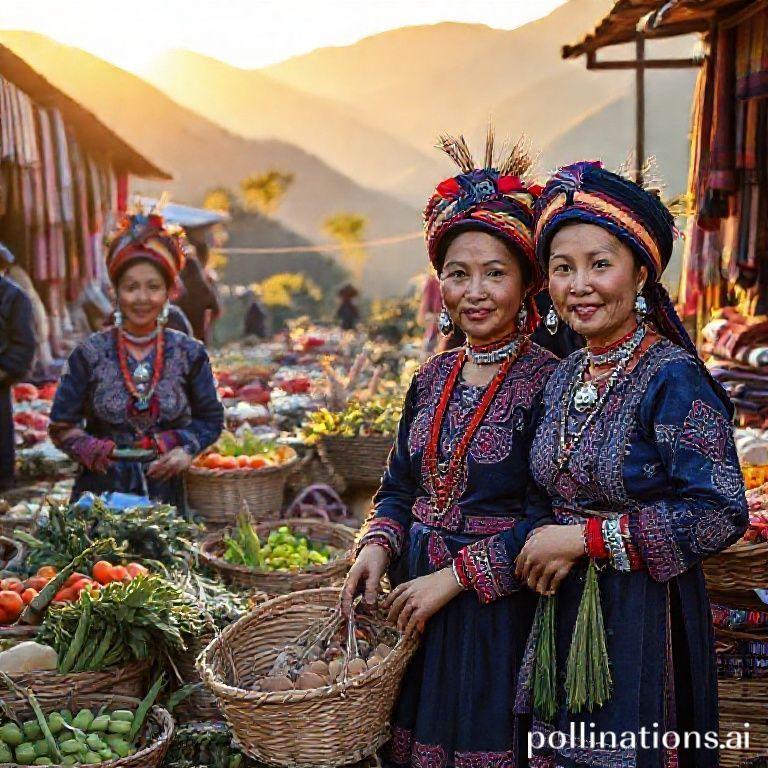
Hmong culture is especially known for its fabric arts. Women learn from a young age how to create complex patterns that tell stories about their family history, spiritual beliefs, and relationship with nature. Their traditional blue-dyed clothing, decorated with detailed embroidery and silver jewelry, acts like a visual diary of their cultural identity.
Their spiritual life centers around the belief that nature and ancestors play important roles in daily life. Spiritual leaders help connect people with the spirit world during important ceremonies. The Hmong New Year is their biggest celebration, featuring traditional music, games where young people can meet potential partners, and community gatherings.
Farming is the foundation of Hmong life. They’ve created stepped rice fields on steep mountainsides, showing how well they’ve adapted to challenging environments. Their traditional houses, built from wood and bamboo, reflect their harmonious relationship with the natural world.
The Tay People: Vietnam’s Largest Minority Group
As Vietnam’s largest ethnic minority, the Tay people have a strong cultural presence, particularly in the northeastern provinces. Their long history in Vietnam has allowed them to develop a sophisticated culture that mixes their own traditions with influences from neighboring groups.
Tay architecture is easy to spot because of their distinctive houses built on stilts. These wooden structures protect against floods and animals while providing storage space underneath. The community house serves as the cultural and spiritual heart of Tay villages.
Their traditional clothing is elegantly simple, featuring blue-dyed fabrics with subtle embroidery. The Tay are particularly skilled at weaving, creating high-quality textiles that are both useful and beautiful.
Tay spiritual beliefs combine ancestor respect with elements of Buddhism and nature spirituality. They maintain special altars in their homes to honor ancestors and nature spirits. Their unique Then ceremony, which involves spiritual journeys to communicate with higher powers, has been recognized by UNESCO as important cultural heritage.
The Dao People: Keepers of Ancient Ceremonies
The Dao people are like guardians of ancient rituals that have been preserved with remarkable care. Living across northern Vietnam’s mountain regions, they maintain a strong cultural identity through their special practices and beliefs.
Dao culture is deeply spiritual, with complex ceremonies marking everything from birth and marriage to death and farming cycles. Their Cap Sac ceremony for young men is particularly important, transforming boys into recognized community members through several days of rituals.
Traditional Dao clothing is spectacular, especially the red Dao subgroup known for their elaborate red headwear and embroidered costumes featuring patterns that represent their view of the universe. Their knowledge of herbal medicine is highly developed, with remedies passed down through generations of traditional healers.
Traditional Celebrations and Festivals
Festivals are like living museums where ethnic minority cultures come alive through music, dance, food, and rituals. These celebrations mark important farming cycles, spiritual events, and historical moments.
The Hmong New Year features colorful traditional costumes, folk games, and musical performances. Young people participate in ball-tossing games that serve as meeting opportunities, while communities gather for feasts and cultural exchanges.
Tay festivals often focus on agricultural cycles. The Long Tong Festival in spring includes prayers for good crops, traditional singing, poetry, and folk games. The Lồng Tồng Festival involves community processions to rice fields where ceremonies ask for abundant harvests.
Dao celebrations include traditional dances and rituals to honor ancestors and community spirits. Their Cap Sac ceremony represents one of their most important cultural events, though it’s not a public festival.
Traditional Crafts and Daily Life
Handicraft production represents both cultural preservation and economic activity for Vietnam’s ethnic minorities. These traditional skills create beautiful useful items while maintaining cultural identity.
Hmong fabric arts are among Vietnam’s most celebrated crafts. Using wax and blue dye, Hmong women create intricate patterns on fabric, with each design carrying specific cultural meanings. Their silverwork shows remarkable metalworking skills.
Tay weaving produces high-quality textiles using traditional methods, with natural dyes creating subtle color variations. Their bamboo and rattan crafts include household items and musical instruments.
Dao herbal medicine represents both traditional knowledge and economic opportunity. Their embroidery requires years of training to master the complex patterns and techniques.
Where to Experience These Cultures
For travelers seeking genuine cultural experiences, several regions in Vietnam offer excellent opportunities to connect with ethnic minority communities.
Ha Giang Province in the far north provides immersive Hmong and Dao experiences. Weekly markets bring different ethnic groups together in traditional dress, and villages offer homestay opportunities.
Sapa in Lao Cai Province remains a popular starting point for exploring ethnic minority cultures. Visitors can explore smaller villages beyond the town center for more authentic experiences.
Mai Chau Valley provides accessible Tay cultural experiences not far from Hanoi. Traditional stilt house homestays allow visitors to participate in daily activities like rice farming and weaving.
Ba Be National Park combines beautiful nature with Tay cultural immersion. Homestays in traditional stilt houses and visits to local villages provide deep cultural insights.
Vietnam’s ethnic minority cultures are like living treasures that continue to grow while maintaining deep connections to their heritage. The Hmong, Tay, and Dao peoples contribute invaluable diversity to Vietnam’s cultural landscape. Their traditions offer fascinating insights into human adaptation and cultural strength.
Experiencing these cultures through respectful tourism creates unforgettable memories while supporting community preservation efforts. By visiting ethnic minority regions with curiosity and respect, travelers can help sustain these cultures while gaining profound appreciation for Vietnam’s diversity.